News & InsightsIn-Depth
2026年1月28日
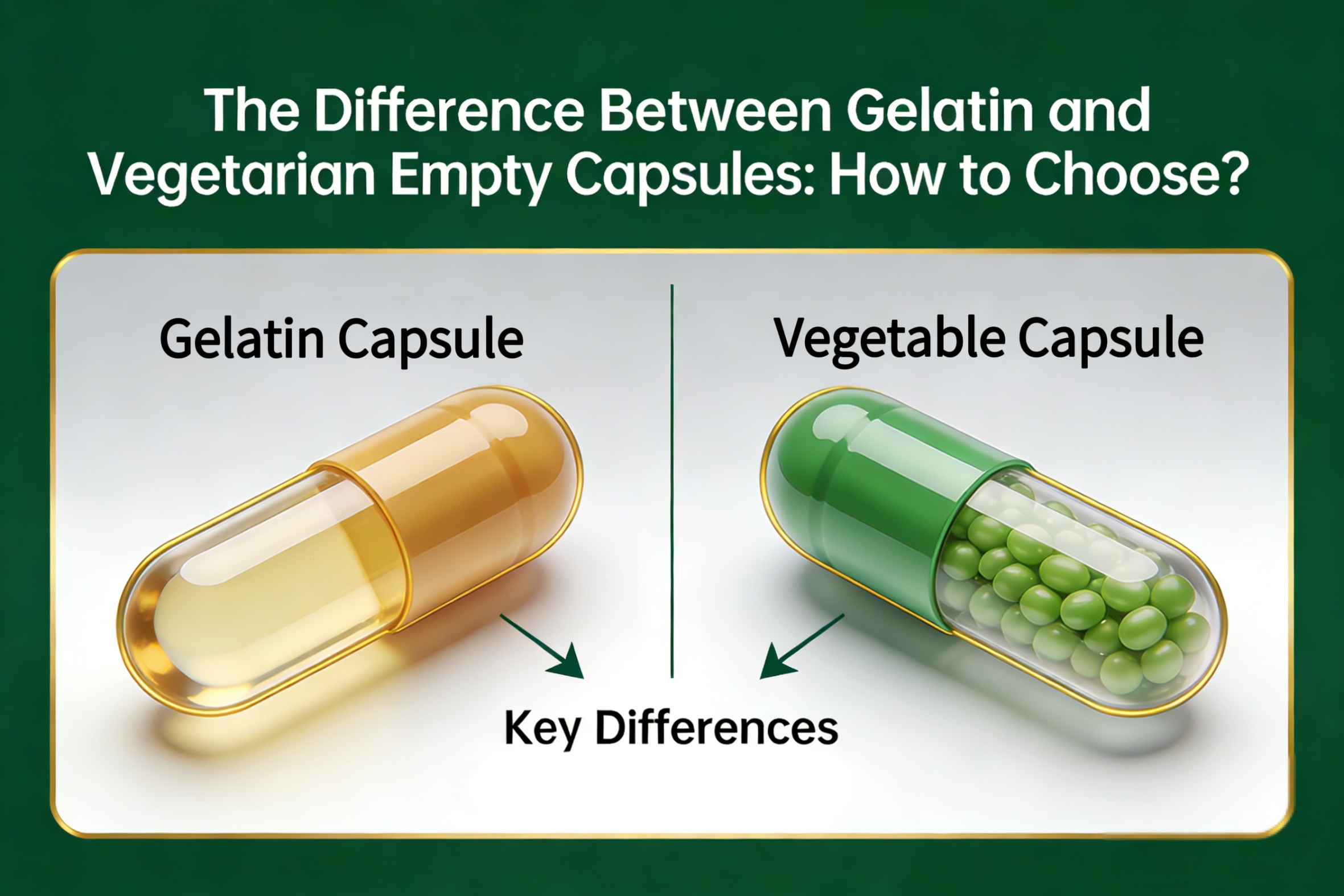
The Difference Between Gelatin and Vegetable Empty Capsules: How to Choose?
The choice between gelatin and vegetable empty capsules has become a key decision for pharmaceutical and nutraceutical manufacturers
The Difference Between Gelatin and Vegetable Empty Capsules: How to Choose?
With the global shift toward green consumption and religious dietary compliance, the choice between gelatin and vegetable empty capsules has become a key decision for pharmaceutical and nutraceutical manufacturers. Below is a concise comparison and practical selection guide to help you make the right choice.
1. Ingredients
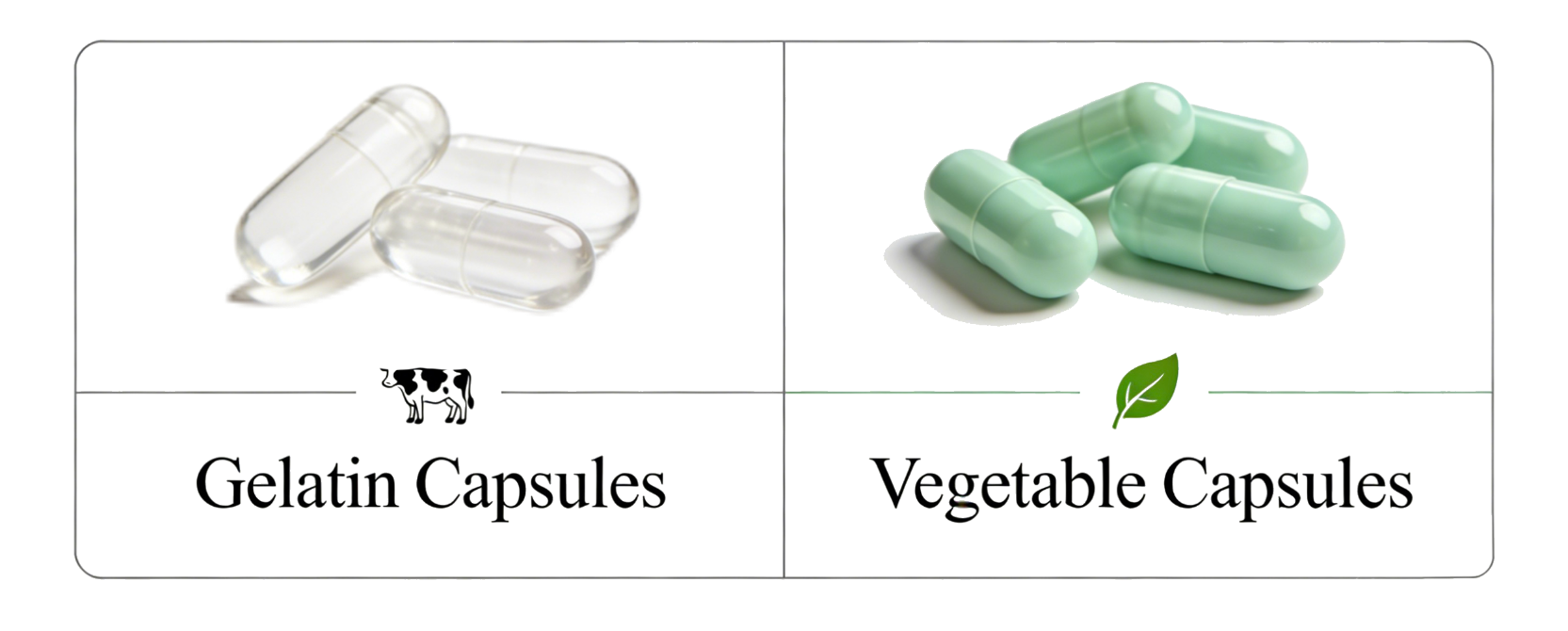
- Gelatin Capsules: Derived from animal collagen (bovine hide or porcine sources), a traditional material used for over a century in capsule production.
- Vegetable Capsules: Plant-based alternatives, mainly including HPMC (Hydroxypropyl Methylcellulose) (from wood pulp/cotton fibers) and starch-based capsules (from corn, potato, or tapioca starch).
2. Key Characteristics
- Gelatin Capsules: High gel strength and fast dissolution; drawbacks include high moisture content (12.5%-17.5%), sensitivity to temperature/humidity, and risk of cross-reaction with amino acids, aldehydes, or vitamins.
- Vegetable Capsules: Low moisture content (5%-7%), excellent stability (no brittleness even at <1% moisture), chemical inertness (no interaction with fillers), and no microbial growth risk (no preservatives needed).
3. Applicable Scenarios
- Gelatin Capsules: Suitable for common pharmaceuticals and supplements with stable formulas, where fast dissolution and mature production processes are prioritized.
- Vegetable Capsules: Ideal for moisture-sensitive contents (e.g., probiotics, herbal extracts) and products requiring long-term storage.
Market Adaptability of Vegetarian Capsules (Europe, America & Middle East)
-Europe & America: Driven by vegan/vegetarian trends (40% of new supplements use plant capsules), vegetable capsules dominate, accounting for 55% of global plant capsule output. They align with "clean label" demands and help brands boost brand equity by 18% in these markets.
-Middle East: Strictly complies with HALAL and KOSHER certifications (vegetable capsules are HALAL-approved, while porcine-derived gelatin is prohibited). No animal allergens make them widely accepted by religious groups.
Practical Selection Tips
1. By Product Type: Choose gelatin capsules for pharmaceuticals requiring stable dissolution; opt for vegetable capsules for nutraceuticals targeting vegetable or religious markets.
2. By Formulation Compatibility: Use vegetable capsules for moisture-sensitive or reactive ingredients; avoid using gelatin formulations that contain aldehydes or sugars.
3. By Regional Demand: Prioritize vegetable capsules for Europe, America, and the Middle East; select starch capsules for cost-sensitive emerging markets.
4. By Production Scale: vegetable capsules suit large-scale production (machine-friendly design); starch capsules are ideal for small-batch, budget-limited projects.
Vegetable capsules are gaining traction with an 8.2% annual growth rate, while gelatin capsules remain irreplaceable in specific pharmaceutical scenarios. Choose based on your formula, market, and production needs for optimal results.